I Thought Taking Over Was Love
Series One of The Lady BuG
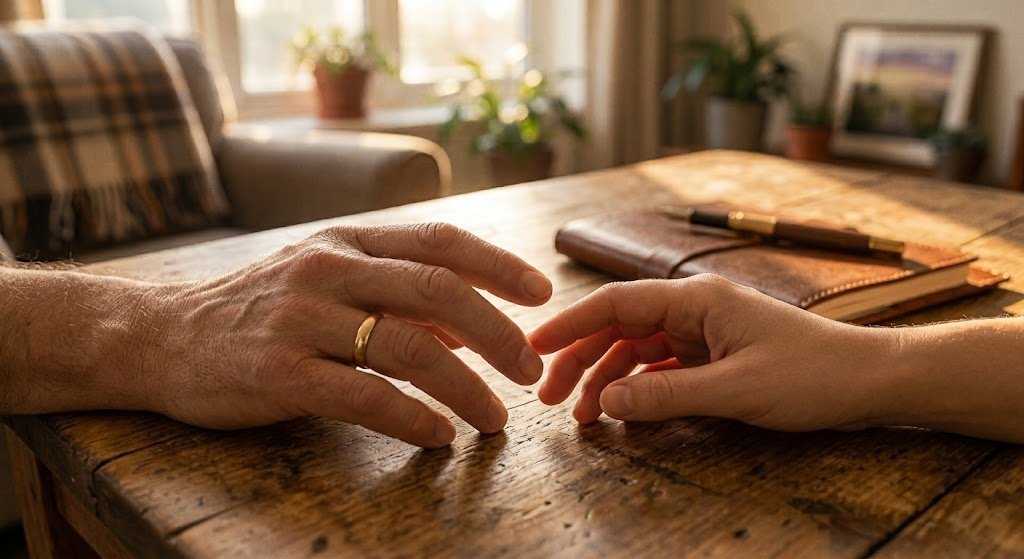
I used to take over so quickly that no one had time to realise I did not trust them.
I called it helping because that sounded kinder than what my actions were saying.
If someone was unsure, I answered.
If they moved too slowly, I finished the task.
If they chose a method I would not have chosen, I stood close enough to correct it before the result could become inconvenient.
I did not think I was controlling.
I thought I was caring.
My way was familiar. It worked. It kept the day moving and protected everyone from mistakes I already knew how to avoid.
Why would I watch someone struggle when I could make the struggle disappear?
The answer took me years to understand.
Because sometimes the struggle was not mine to remove.
Every time I stepped in before someone had the chance to think, I sent a message without using words.
I do not believe you can do this.
I never intended to say that.
But intentions do not always change what another person experiences.
A corrected hand can still feel distrusted. A task quietly taken back can still feel like failure. A constant offer of help can become proof that someone is never expected to manage alone.
I saw this clearly only when I became too tired to intervene.
A responsibility landed with someone I would normally have supervised from beginning to end.
I waited for the mistake.
Instead, they found a way I had not considered.
It was not my way.
That was what made it difficult to recognise as competence.
They took longer in one place and moved faster in another. They ignored a detail I would have prioritised and noticed one I might have missed.
The result was not a copy of what I would have done.
It was good.
For a moment, I felt relieved.
Then I felt humbled.
The story I had been telling myself was not, "No one else can do this."
It was, "No one else can do this exactly as I do."
Those are very different truths.
I had mistaken sameness for reliability.
Worse, I had made myself indispensable in places where other people might have become confident if I had stopped reaching past them.
Overhelping can create the very dependence that exhausts us.
We take over because no one acts quickly enough. Then no one acts quickly because they have learned we will take over.
We become resentful that everything is ours while continuing to collect each responsibility before anyone else can fully own it.
The pattern is painful because it does not have a villain.
There is only love mixed with anxiety, competence mixed with control, and good intentions repeated until they become a rule no one chose aloud.
I am trying to break that rule.
Now, when someone begins a task, I practise staying where I am.
I let silence exist after a question instead of filling it with my answer. I allow a method to look unfamiliar without treating unfamiliarity as danger. I try not to fix the first imperfect step of something that is still being learned.
It is uncomfortable.
Sometimes I can see the easier way and have to keep it to myself.
Sometimes the result is less efficient.
Sometimes a mistake happens that I could have prevented.
But something else happens too.
People learn.
They remember because the responsibility reached them. They build confidence because the solution became theirs. They begin offering before I ask because they no longer assume I will always step in first.
Trust is not only believing that someone will do things well.
Sometimes trust is allowing them to do things badly enough to become better.
I still help.
I still teach when teaching is wanted. I still step in when the stakes are too high for a lesson.
But I am learning that love does not always need my hands on the outcome.
Sometimes love is the space I leave around another person's ability.
I thought taking over proved how much I cared.
Now I understand that stepping back can say something more generous:
I believe there is a capable person here, and I am willing to wait long enough to meet them.
Before You Go
If this story made you recognise the difference between caring and controlling the outcome, do not turn that recognition into another reason to judge yourself. Most of us took over because it once felt like the safest, kindest thing to do.
Now there can be another kind of love: the kind that leaves space, tolerates difference, and trusts that not everything has to be done your way to be okay.
The next story turns the attention back toward you—and asks why being still can feel so wrong when you have spent years proving your value through doing.